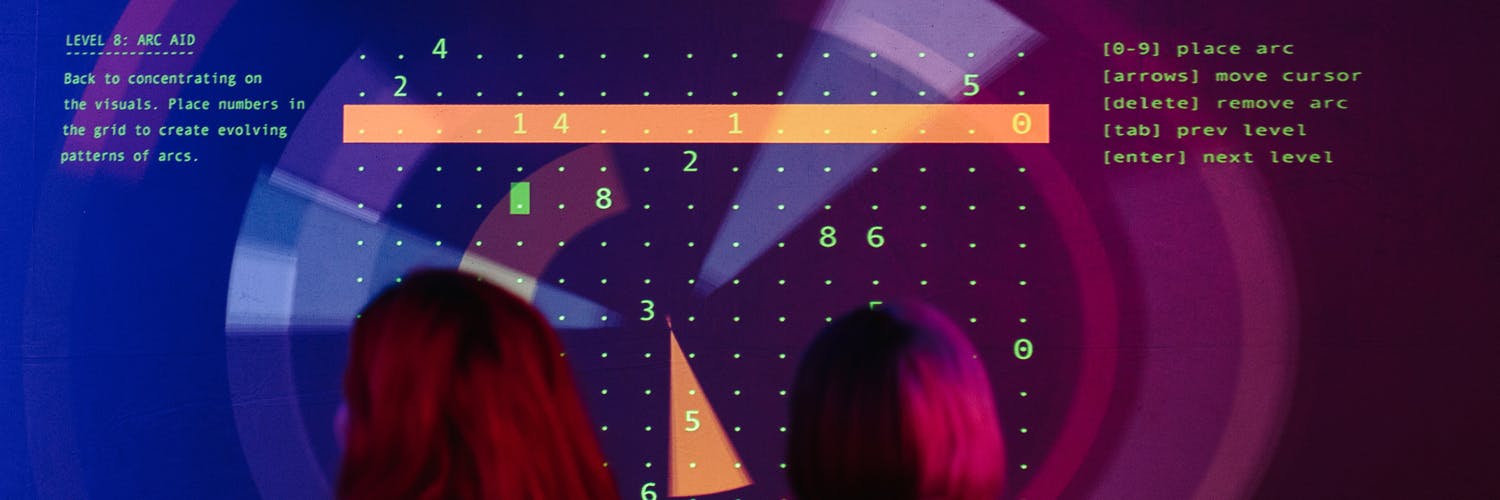
CCT plays an active role in developing the creative technology sector locally, nationally, and internationally.
Photography: Ibi Feher
We work to address structural gaps in skills, recognition, and career progression — offering skills development pipelines, mentoring, mid-career opportunities and sector advocacy.
Our sector development work includes:
We focus on longterm capacity building rather than short term interventions — supporting sustainable careers, inclusive pathways, and informed decision making.
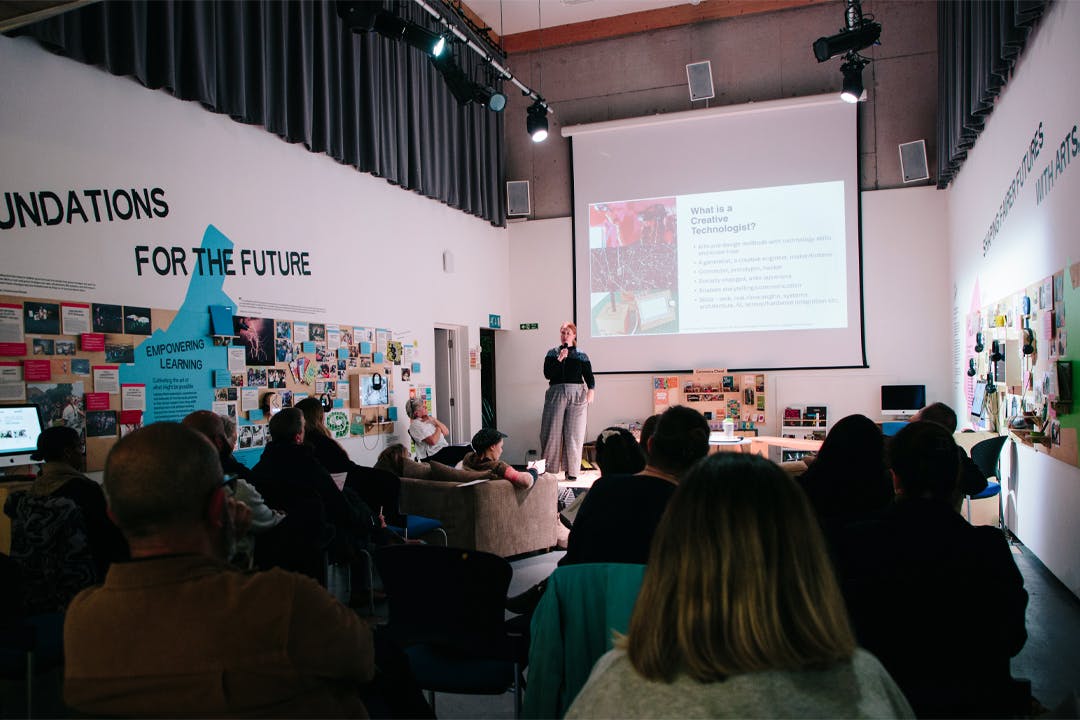
Creative Technologists are hybrid practitioners working at the intersection of computing, design, and creative practice.
They combine:
Creative Technologists are uniquely positioned to translate ideas into working systems, support innovation with emerging technologies such as AI, and ensure that technical decisions are aligned with creative, cultural, and human values.
At CCT, we advocate for Creative Technologists as research leaders, collaborators, and educators — not just technical support.

Improving access to creative technology careers by raising awareness of opportunities, working with community partners, and removing barriers to participation.
Supporting undergraduate and postgraduate education that integrates industry-embedded learning (such as the Creative Industry Challenge and 3D Scanning Pipelines with the Fashion Museum), research-enabled education, and targeted short courses.
Embedding graduate placements within research- and industry-focused Innovation Labs and Knowledge Exchange partnerships. Supporting creative technologists through early-career mentoring and associate fellowships, and working with industry to create accessible, inclusive routes into employment. Working with Bath Spa University initiatives including EMERGE, Juno House and The Studio. Providing mentoring for graduates entering the creative industries—where work is often freelance or temporary—while engaging businesses to recognise the value graduates bring.
Championing mid-career creative technologists through advocacy, network development, professional growth, and access to R&D opportunities, recognising that this career stage is critical to sector resilience, innovation, and the creation of new entry points into the creative industries.
Supporting senior creative technologists to act as leaders, mentors, and system-shapers through strategic R&D, knowledge exchange, and policy-facing activity, ensuring expertise is retained, shared, and leveraged across the sector.
Research, Evidence, and Advocacy
CCT leads a landmark research programme examining the role of the Creative Technologist in the UK.
Through sector research and consultation, the report explores:
The report will provide evidence based recommendations for educators, employers, funders, and policymakers — supporting healthier and more effective creative technology ecosystems.
If you are interested in contributing to the research or finding out more, please get in touch.