
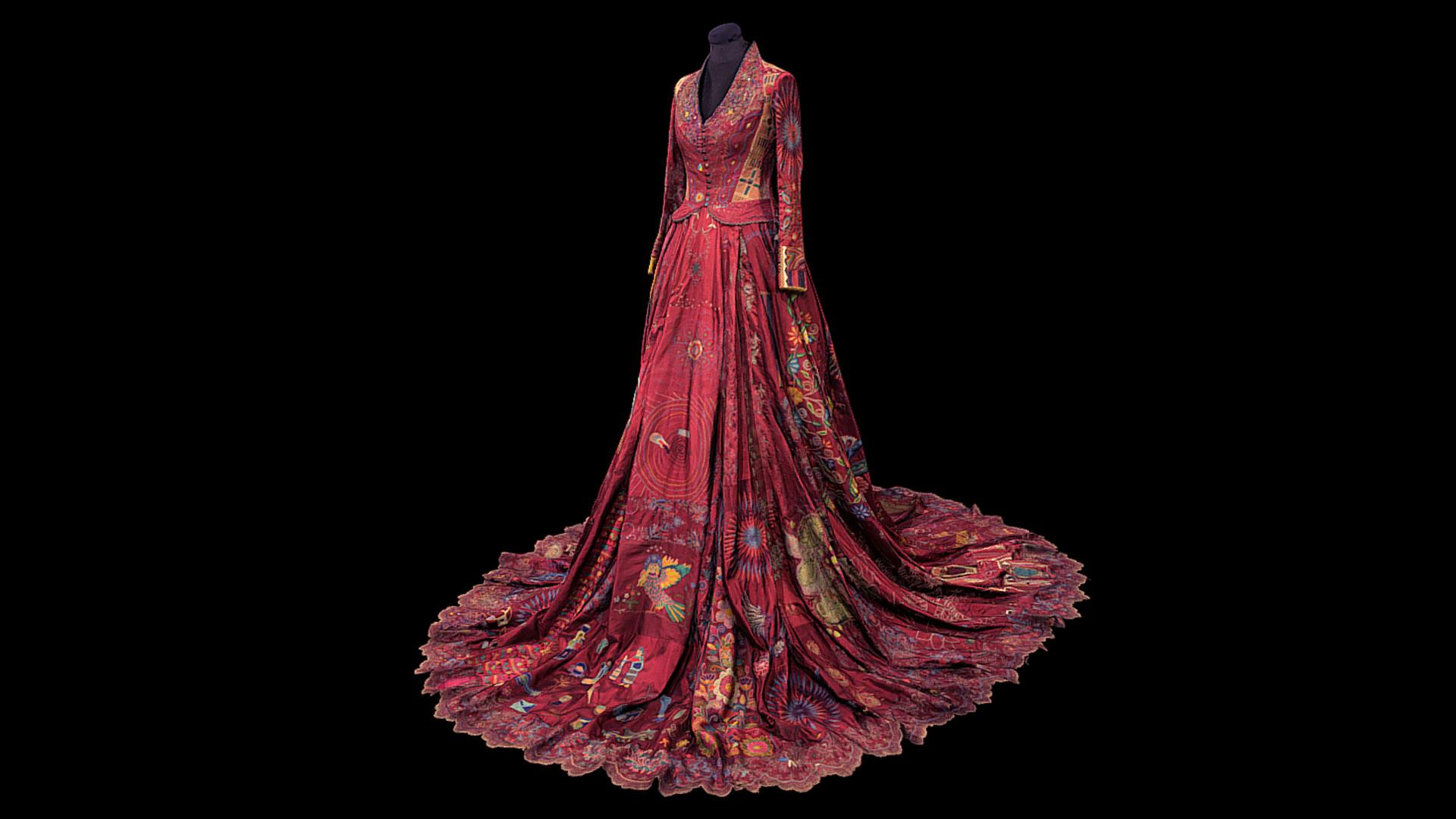
Exploring how digital tools can open the Red Dress to new audiences and forms of engagement, while revealing unexpected connections between hand-crafted textiles and 3D model-making rooted in sustainable ways of working.
Overview
The Digital Red Dress project brings together creative technology, craft heritage, and community storytelling through the digitisation of The Red Dress — an internationally celebrated collaborative embroidery artwork created by artist Kirstie Macleod. The project uses photogrammetry and 3D modelling to create an accessible digital twin of the dress. The work opens new possibilities for exhibiting, archiving, and engaging with the stories stitched into the garment by 380 embroiderers, mainly women, from 51 countries, many from marginalised or displaced communities and those living with conflict.
Background and Context:
The Red Dress project, conceived by British artist Kirstie Macleod, provides an artistic platform for individuals, particularly women, and communities around the world to tell their stories. Over 15 years, contributors used embroidery to express personal experiences — from community identity, joy and celebration to conflict, migration, and resilience. While the physical dress continues to travel globally, ensuring its accessibility has become increasingly important. Traditional exhibition formats limit who can see the dress and who can spend time understanding the stories held within it. Creative technology offers a way to widen access while preserving the integrity and tactile richness of the original artwork. At the same time, the project engages broader debates around digital heritage, sustainability, and the responsibilities involved in translating physical craft into digital forms.
Project Aims and Approach:
The Digital Red Dress project aims to:
- Digitally preserve the garment, in both high resolution and accessible web versions, for future generations.
- Widen global access by enabling online viewing and interactive engagement.
- Explore sustainable digital making, modelling mindful, human-centred approaches to emerging technology.
- Support creative research into how digital craft can honour embodied, community-based practices.
Activities, Findings & Emerging Insights:
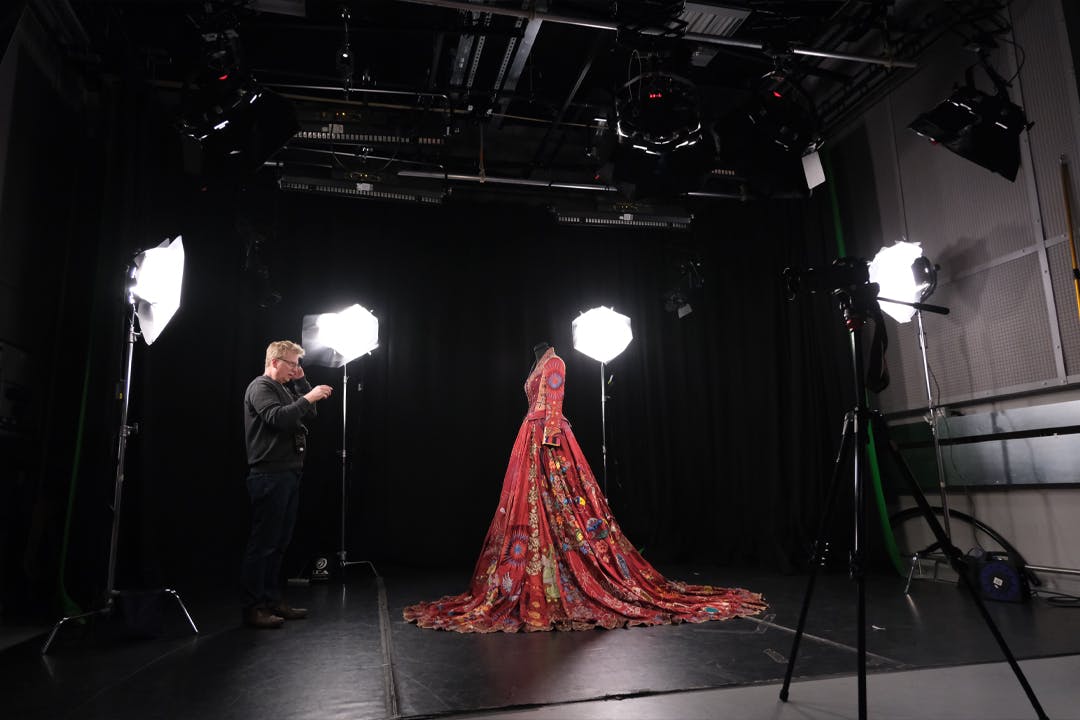
Photogrammetry, a process of turning photography into a 3D model, took place at our Newton Park campus. We used Agisoft Metashape to process the images and create the first 3D model and then used Maya to optimise the model data and Photoshop to improve the texture.

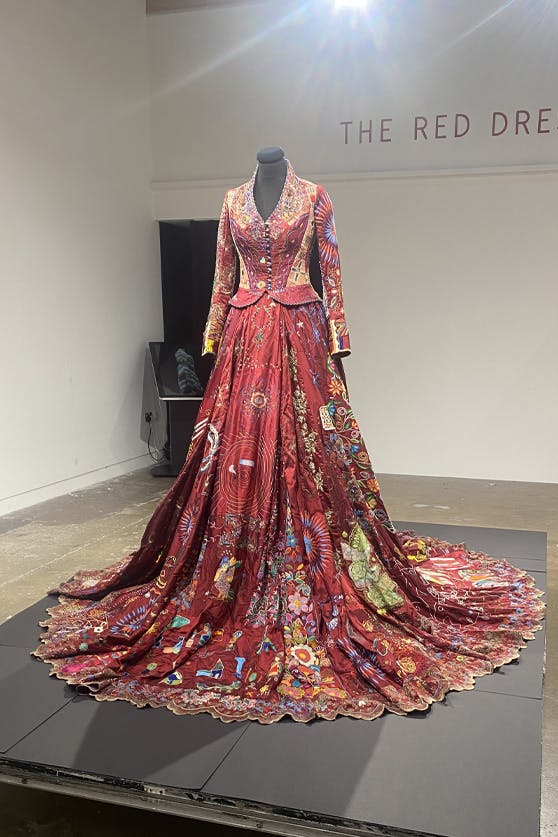
The Red Dress was exhibited at our Locksbrook Campus as part of Sustainable Fashion Week, and we built a web viewer so the dress could be explored digitally alongside the physical version.

The resulting digital model captures the complexity of the embroidered surface while allowing viewers to zoom, rotate, and explore details that can be difficult to see in physical exhibitions. Shared publicly as Sketchfab’s Staff Pick, the Digital Red Dress has already reached tens of thousands of online visitors, many encountering the project for the first time.
A key insight emerging from the project is the value of slowness in both craft and computation. Spending time with an object like The Red Dress raised questions on the importance of slowness and craft in 3D model making, including the benefits of sustainable practices of data optimization and considered multiplatform use. The careful process of constructing and reconstructing the model takes inspiration from the ‘slow’ craft approaches to textiles. Taking time to reflect on each stage — rather than treating the digital simply as a tool for speed or automation — creates deeper alignment with the ethos of the Red Dress.
Another important outcome is the project’s role in enabling future forms of storytelling. The digital model is not a final product but a foundation for new creative, curatorial, and educational possibilities. It demonstrates how digital twins can support community-led narratives, ethical archiving, and more inclusive approaches to heritage sharing.
If you would like to look at the Red Dress:
Kirstie’s Website: https://reddressembroidery.com/
What Next?
The next phase of the project involves developing a digital archive of the Red Dress, documenting not only the finished garment but also the process — the making of the dress, and the stories contributors have expressed through embroidery. This archive will create an accessible resource that supports research, education, community engagement, and future exhibitions.
The Digital Red Dress demonstrates how creative technology can extend the life of cultural works, amplify underrepresented voices, and support sustainable, inclusive modes of heritage sharing. As the project grows, it will continue to explore how digital tools can honour, rather than overwrite, the human stories at the heart of craft-based artistic practice.
Team:
Dr Coral Manton - Project lead, photogrammetry, retopology, 3D modelling.
Fred Reed – Scan photography and studio lighting
Richard Wood – Photography Studio Management