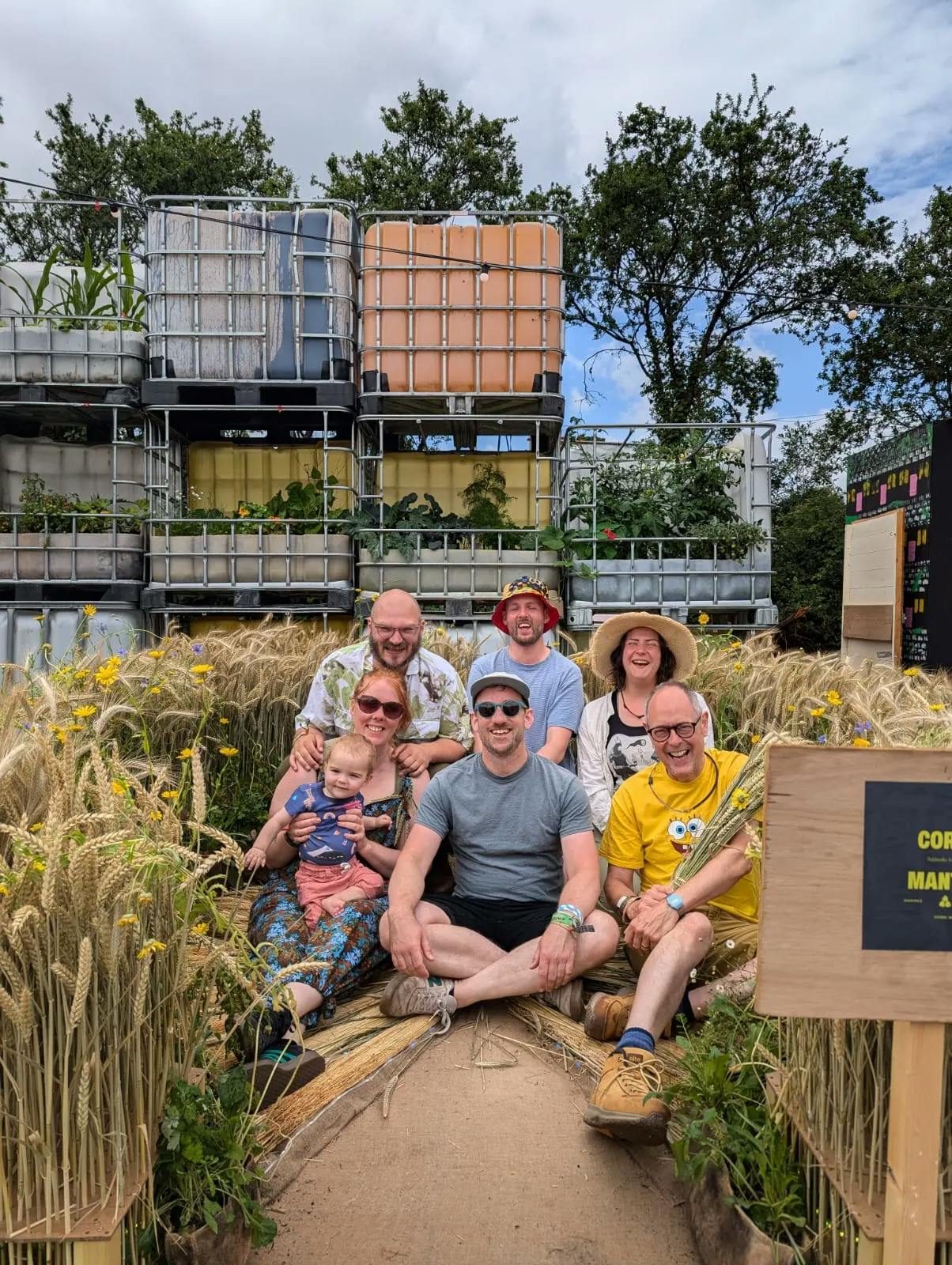
Fieldworks was a crop-circle-inspired installation created for the new Allotments area of Shangri-La at Glastonbury Festival 2025. We were invited by Shangri-La Creative Director Kaye Dunnings to develop a work for this new growing space — our fourth year collaborating with her and the Shangri-La team.
Built from wheat, wildflowers, wool and DIY electronics, the installation explored relationships between land, folklore, farming and collective gathering. It created a circular space for rest and conversation within one of the festival’s busiest routes: a temporary commons formed from natural materials. Visitors stepped into a standing field of wheat, took part in workshops and were invited to reflect on land access, food systems and shared cultural space.

The design was led by Dr Coral Manton and grew from long-standing interests in common land and countercultural heritage. Inspired by crop circles, which Coral used to make, solstice gatherings, and South-West folklore, Fieldworks asked how temporary creative interventions can reconnect people with farmland and shared landscapes.
Although agriculture shapes much of the UK landscape, most people have little direct contact with farming. The installation responded to this disconnection by bringing elements of farmland — wheat, grasses, wildflowers — into a festival context and reframing them as a space for collective reflection and care.
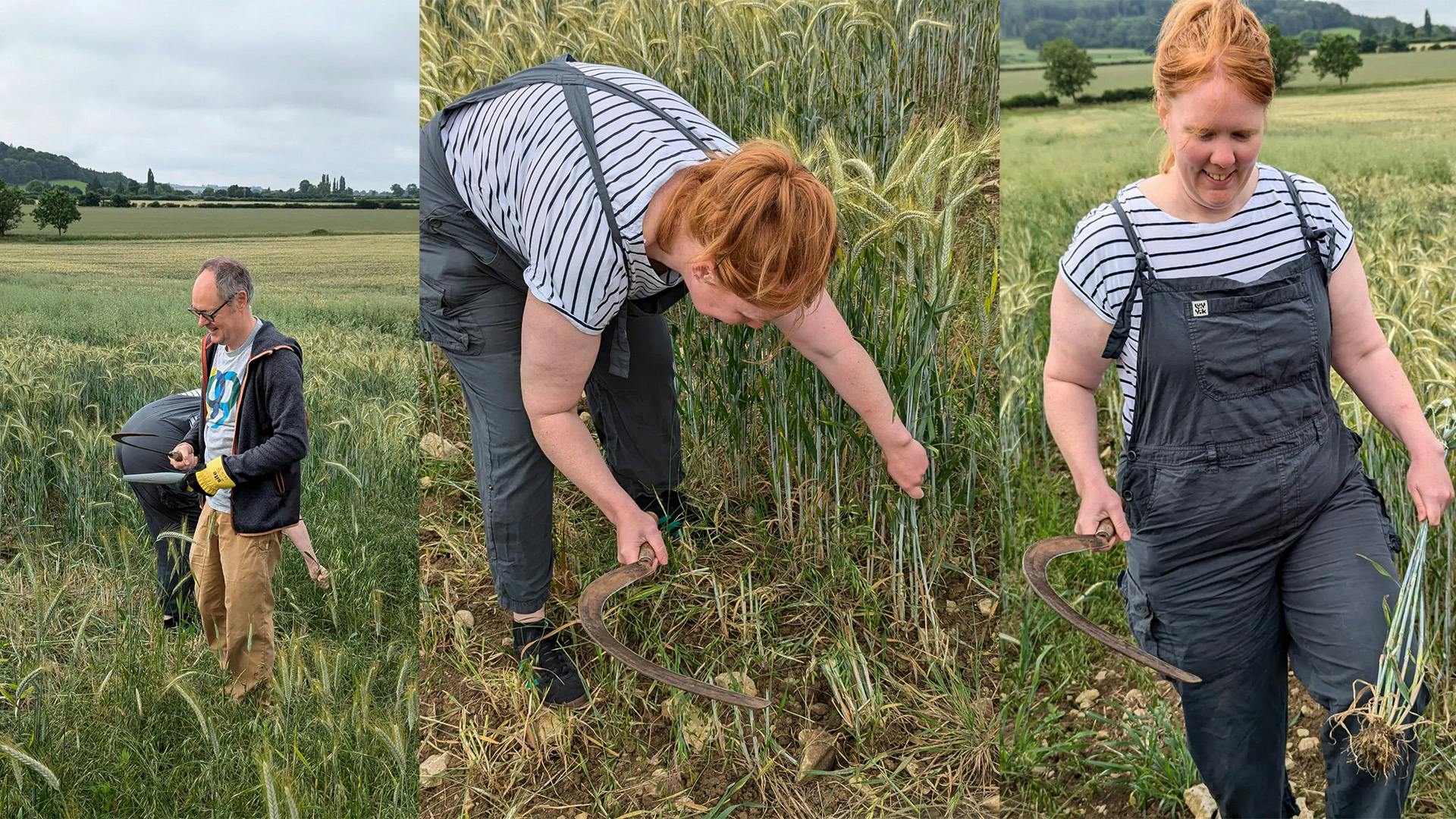
Bath Spa University’s Newton Park campus, where the Creative Computing team are based, is surrounded by Newton Park Farm. The team harvested their own wheat from the farm for the installation, got wool from another local farm, grew wildflowers for the circle and barley for the workshop – getting as much material as possible locally and sustainably.
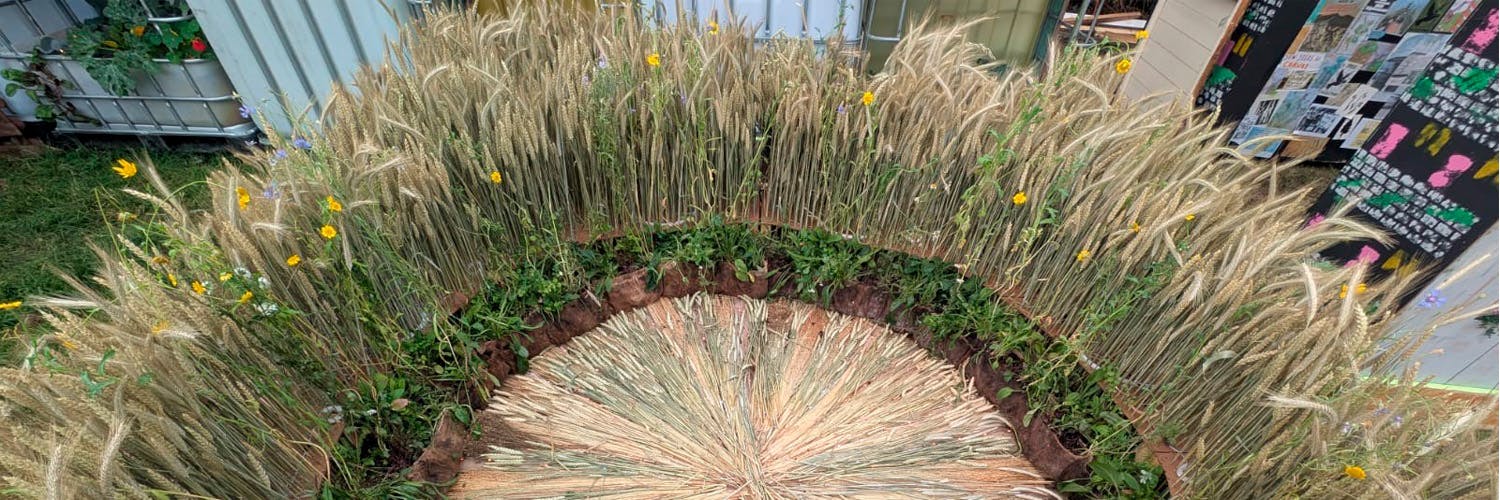
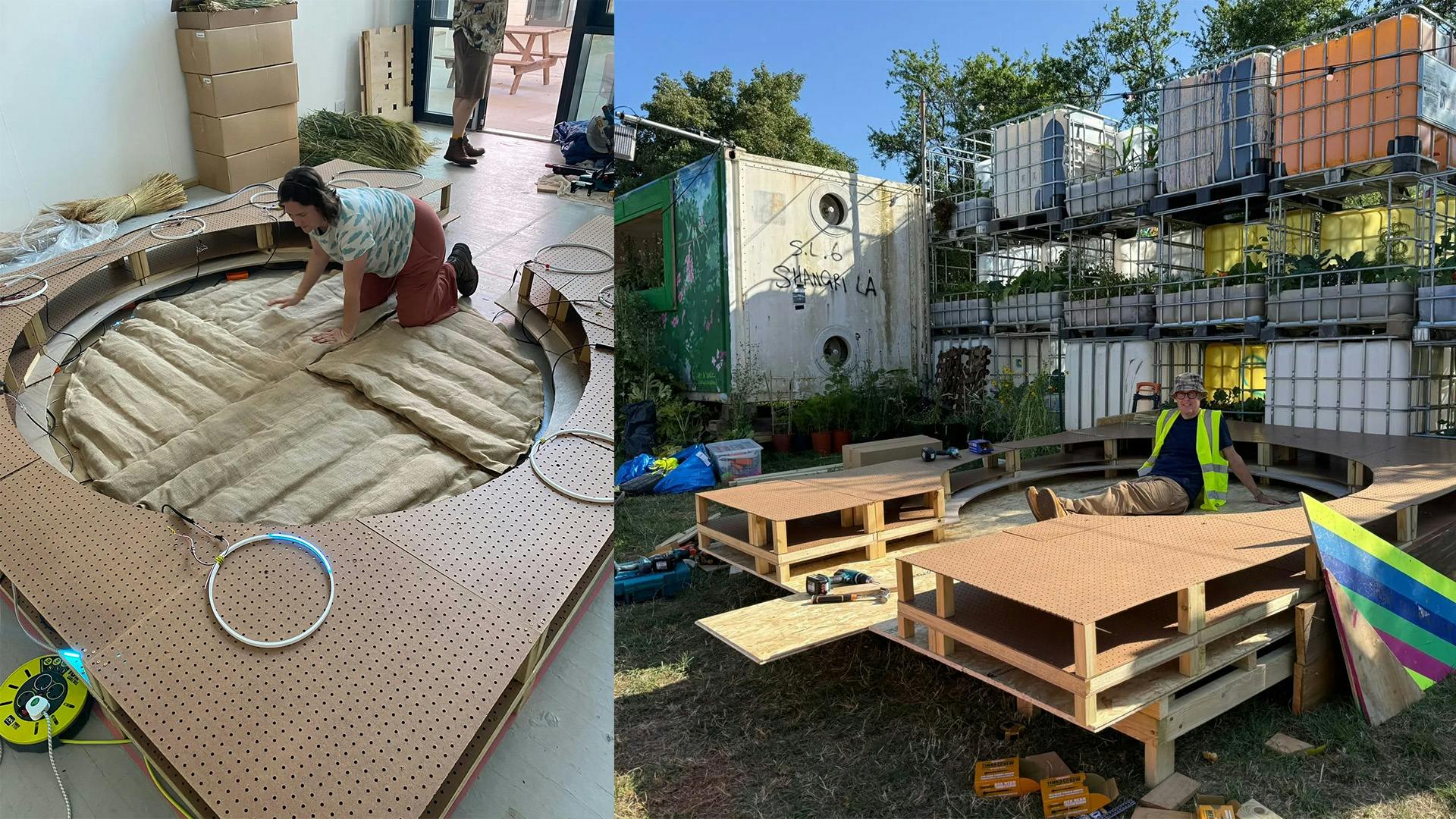
The design translated the experience of entering a crop circle into a portable structure: a square frame densely planted with thousands of dried wheat stems surrounding a circular woven mat for seating, with a ring of wildflowers supporting pollinators and biodiversity. Embedded LEDs and a small microcomputer created night-time animations using 3000 LEDs, allowing the work to shift to a new space after dark.
Natural materials were prioritised, with technology used sparingly and without screens. The installation operated as a hybrid of craft, creative computing, gardening and spatial storytelling — an example of research-through-making that bridges digital and ecological practices.
Fieldworks was developed through a collaborative, interdisciplinary process involving creative technologists, a gardener, installation designers, festival producers and local farms. Wheat was harvested by hand, dried on campus and individually inserted into the structure. Wildflowers were grown in Bristol and transported in biodegradable “seed snail” planters developed by the project gardener Ellie Rogers, while the central mat incorporated locally sourced wool and hand-sewn LEDs. The project foregrounded shared labour and knowledge exchange — from harvesting and planting to electronics, quilting and workshop facilitation.

Once on site, the installation quickly became a place to pause within the intensity of the festival. People rested inside the circle, met friends, took photographs and spent time among the wheat. Workshops invited festival-goers to make traditional corn-doll tokens, opening conversations about folk practices, sustainability and the idea of the commons. Rather than a fixed artwork to be viewed from the outside, Fieldworks functioned as an environment to be used and shaped by those who entered it over the weekend — echoing the temporary and ownerless nature of crop circles themselves.
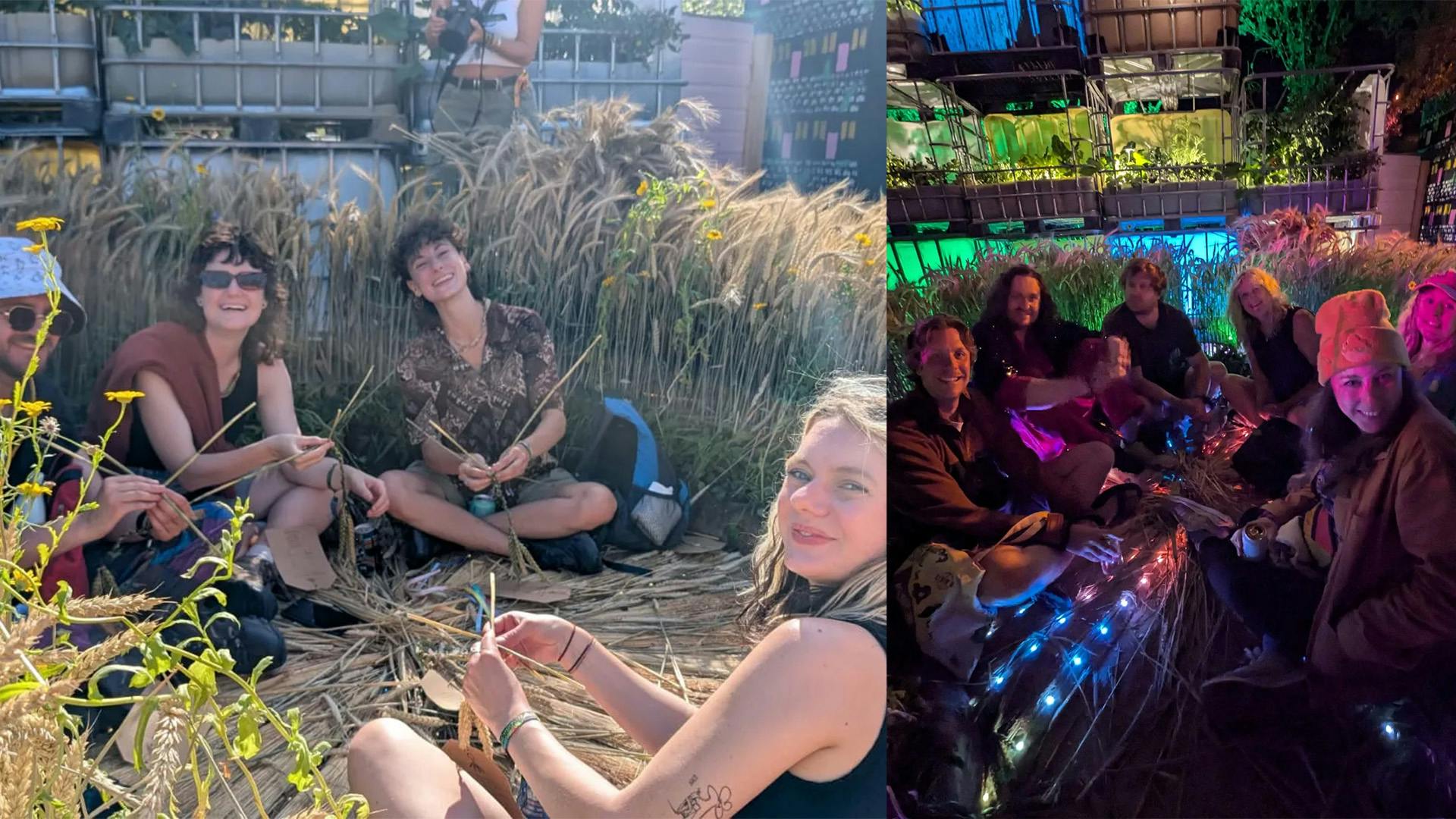
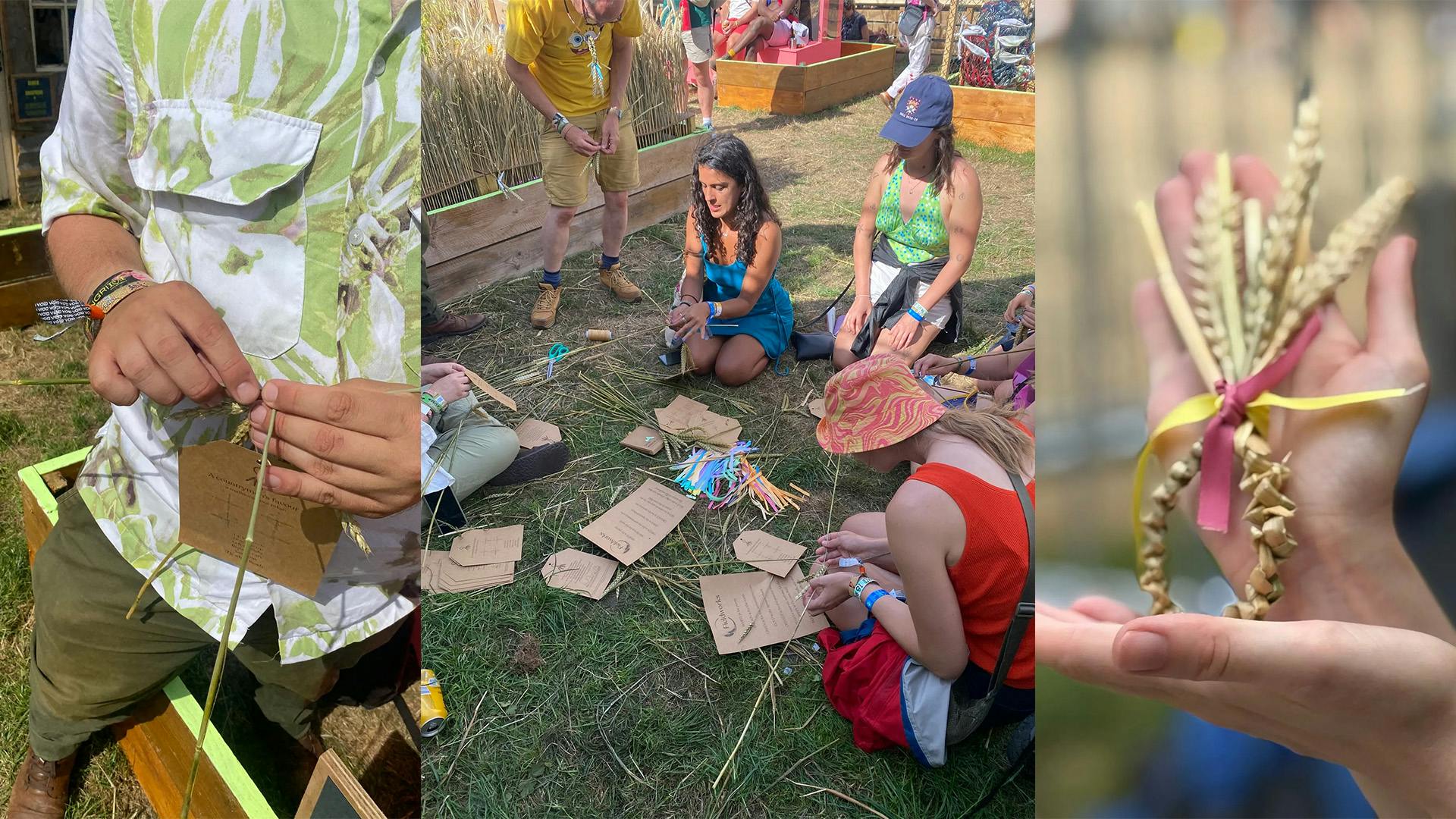
At its core, the project tested how temporary creative interventions can reconnect people with land-based knowledge and shared cultural space. By combining folklore references with contemporary making practices, it explored how creative technology can sit lightly within ecological contexts rather than dominate them. The installation suggested that even in highly mediated festival environments, there is a strong appetite for tactile, plant-based spaces that invite rest, reflection and conversation.
The project also highlighted practical challenges around sustainable sourcing for electronics and the importance of designing installations for reuse, repair and longevity. Future iterations of Fieldworks may evolve into a travelling installation or spatial sound environment incorporating field recordings and community voices about land and access. There is particular interest in continuing to work with the Newton Park landscape and, in future builds, using even more locally sourced materials.
In The Press:
Royal Horticultural Society: Glastonbury goes gardening / RHS Gardening
The Art Newspaper: Glastonbury is over — but what might it look like in the future? Artists are proposing a sustainable model — The Art Newspaper — International art news and events
Design Week: “Hope for the future” — The plant-filled redesign of Glastonbury’s Shangri-La — Design Week
BBC — https://youtu.be/pfH2dSIK2s8?si=Ysm9pGdbQOFAm_fE
NME: https://youtu.be/5gP4qfcIc9I?si=6SknI6ZJuxMP2YUw
Creative Boom: Glastonbury 2025: How Shangri-La is schooling the art world | Creative Boom
Team:
Bath Spa University: Coral Manton, Dave Webb, Nigel Fryatt, Sam Sturtivant, Dicky Duerden
Gardener: Ellie Rogers
University of Bristol: Pete Bennett