
Unlocking the Fashion Museum Collection Through 3D Scanning
In 2023, Dr Coral Manton began an ambitious project to 3D-scan garments from the Fashion Museum Bath collection. With the museum’s collection temporarily in storage while a new museum is developed in Bath (opening planned for 2030), the project explored how digital tools might unlock access to objects that are rarely seen — and use them to inspire conversations around mending, repair and sustainable fashion.
The initiative set out to test how 3D scanning could help audiences experience historic garments in new ways, while also supporting Sustainable Fashion Week by highlighting stories of alteration, adaptation and care embedded in clothing. At its core, the project asked: how can digital access inspire a new generation of menders and advocates for sustainable fashion?
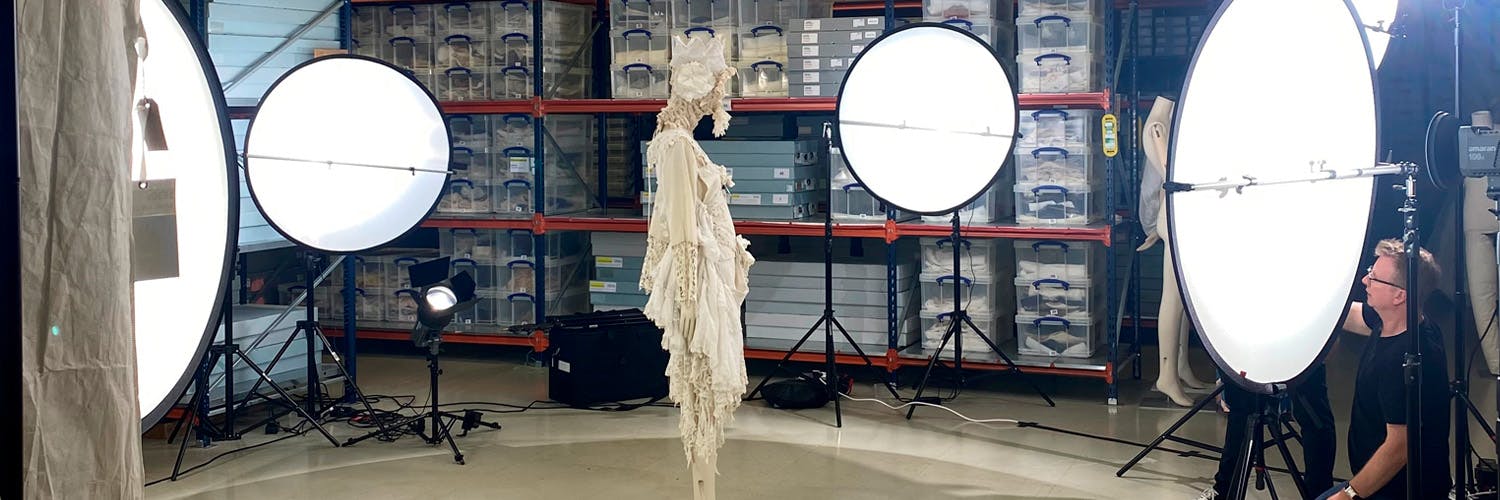
Scanning inside Fashion Museum Bath storage facility
A New Way to Experience the Collection
Three garments were selected from the Fashion Museum Bath collection to demonstrate long-standing traditions of recycling, repairing and remaking textiles. These pieces show how valuable fabrics were historically kept in use for as long as possible — a practice with renewed relevance today.
Coral created detailed 3D scans of each object, optimised the models and built a bespoke web viewer that allows visitors to explore garments interactively. Users can rotate the pieces, zoom into details, and click hotspots to reveal close-up photographs and curatorial commentary about specific mends, alterations and sustainable techniques.
The project was a collaborative effort. Photography and lighting were led by Fred Reed, with studio support from Richard Wood. Fashion Museum curators Rosemary Harden and Fleur Johnson worked with the team to select garments that each told a different story about sustainability and repair.
Scanning in Storage: Building a Mobile Studio
This was the first time 3D scanning had taken place at the Fashion Museum’s storage facility, so a temporary studio had to be built on site. Lighting rigs were assembled using equipment from university TV studios, Newton Park, and a white sheet was suspended above the garments to allow even overhead illumination.
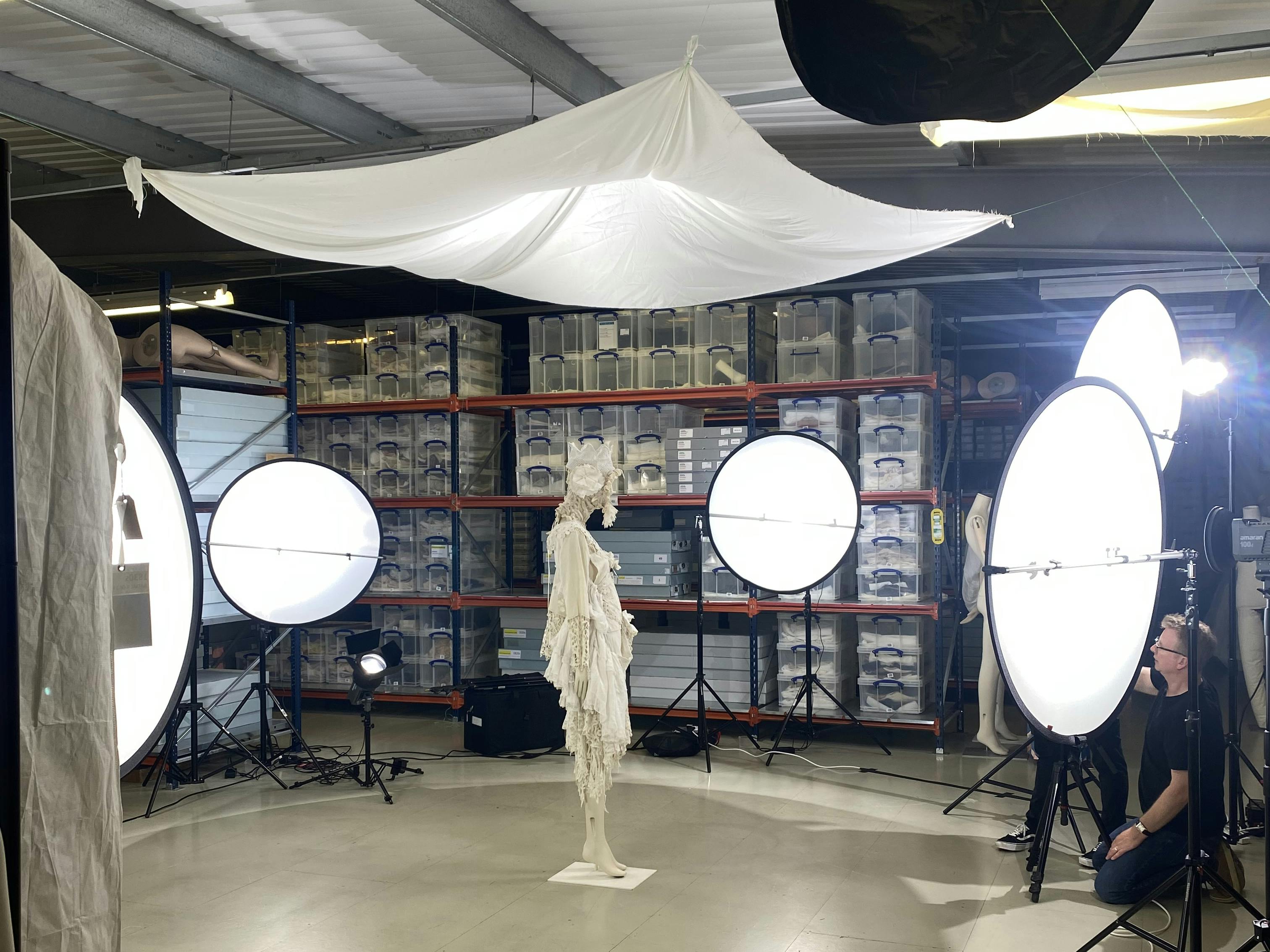
Each garment was carefully prepared by the museum’s curators before being photographed from all angles. Over 100 images were captured per piece, including detailed close-ups of areas showing wear, mending and alteration.

Using Agisoft Metashape, Coral generated point clouds and initial 3D models from the photographs. The models were then refined using a combination of Metashape and Autodesk Maya:
· retopologising meshes for clarity and efficiency
· optimising file size for web display
· UV-unwrapping and reconstructing textures
· ensuring accuracy while keeping models accessible online
A custom browser-based viewer was then developed so audiences could explore the garments in 3D and access interpretive hotspots written by curator Fleur Johnson.
The Garments
Blackwork Waistcoat (early 17th century)
One of the oldest objects in the collection, this early 17th-century blackwork waistcoat has been altered multiple times to extend its wearable life. Hand-embroidered decoration — costly and time-consuming to produce — was carefully positioned to minimise waste. Subsequent alterations reshaped and resized the garment as needed.
Because of its age and sensitivity to light, the waistcoat can only be displayed for limited periods. The 3D model therefore demonstrates the power of virtual reproduction: providing detailed access to a fragile object that cannot be regularly exhibited.
Patchwork Dress (mid-20th century)
This patchwork dress was made at home during or just after the Second World War by violinist Janet Tuke, who wore it for recital performances. Constructed from a variety of recycled cotton and silk-mix fabrics, it reflects the “make-do-and-mend” ethos of the period.
Although parts of the blue fabric are now splitting, the surrounding patchwork supports the structure, demonstrating the durability of pieced textiles. During the digital modelling process, Coral followed the patchwork seams in the retopology — revealing insights into how the garment was constructed and repaired.
A Dress of Hope (Dress of the Year 2020)
A Dress of Hope, by Ibrahim Kamara and Gareth Wrighton, was selected as the Fashion Museum’s Dress of the Year 2020 by Iain R Webb. Created during the global pandemic, the ensemble symbolises resilience and sustainability. It is made from antique table linens, bed linens and lace trimmings — materials reimagined to form something new.
Wrighton described working with a limited number of cuts and adjustable drawstrings so the garment could be reconfigured and adapted over time. The piece invites wearers to experiment, repair and remake — echoing historical practices of clothing reuse while speaking to contemporary environmental concerns.
Mending, Sustainability and Public Access
These 3D scans were presented during Sustainable Fashion Week in Bath, giving audiences the opportunity to encounter garments currently kept in storage and therefore out of public view. Installed on a large-format touchscreen, the bespoke web viewer allowed visitors to rotate, zoom and explore each object in detail, discovering areas of repair, alteration and wear that are often difficult to see even in a gallery display.


The project shows how digital tools can surface the hidden stories within museum collections and reframe historic dress through the lens of sustainability. By focusing on mending, adaptation and longevity, the scans connect past practices of care and resourcefulness with contemporary conversations around responsible fashion.
Interactive 3D models make it possible to examine stitching, construction techniques and fabric condition at a level of detail not usually accessible to the public. They also offer a practical way to keep the Fashion Museum’s collection visible and engaging while work continues on the new museum in Bath, ensuring that objects in storage can still be explored, studied and enjoyed.
Challenges and Future Directions
The bespoke web viewer proved a powerful way to showcase details that would otherwise remain unseen. It also suggests new possibilities for museums whose collections are largely in storage: digital access can keep objects in the public eye, support research and education, and inspire creative reuse.
Building on this pilot, Coral is now exploring how museums might approach digitising collections at scale. For a 3D collection to be truly meaningful, it needs enough objects to reveal patterns, trends and stories — not just isolated examples. The next phase will investigate workflows, infrastructure and collaboration needed to make large-scale 3D access possible.
Watch this space…